

Github · GitHub Repository Radar
nektos act
Run your GitHub Actions locally 🚀
Stars
71,783
Forks
2,023
Watchers: 71,783
Language
License: MIT License
Repository Radar Score
59 / 100
Growth
- 7d
- +0
- 30d
- +0
- %
- 0.0%
Not enough metric snapshots yet to chart growth for this repository.
Score breakdown
- popularity 86
- growth 0
- activity 75
- freshness 100
- community 84
Need help integrating this stack?
Our team builds with modern open-source stacks. Tell us what you are shipping.
Get a quote →

"Think globally,
actlocally"
Run your GitHub Actions locally! Why would you want to do this? Two reasons:
- Fast Feedback - Rather than having to commit/push every time you want to test out the changes you are making to your
.github/workflows/files (or for any changes to embedded GitHub actions), you can useactto run the actions locally. The environment variables and filesystem are all configured to match what GitHub provides. - Local Task Runner - I love make. However, I also hate repeating myself. With
act, you can use the GitHub Actions defined in your.github/workflows/to replace yourMakefile!
Tip
Now Manage and Run Act Directly From VS Code!
Check out the GitHub Local Actions Visual Studio Code extension which allows you to leverage the power of act to run and test workflows locally without leaving your editor.
When you run act it reads in your GitHub Actions from .github/workflows/ and determines the set of actions that need to be run. It uses the Docker API to either pull or build the necessary images, as defined in your workflow files and finally determines the execution path based on the dependencies that were defined. Once it has the execution path, it then uses the Docker API to run containers for each action based on the images prepared earlier. The environment variables and filesystem are all configured to match what GitHub provides.
Let's see it in action with a sample repo!
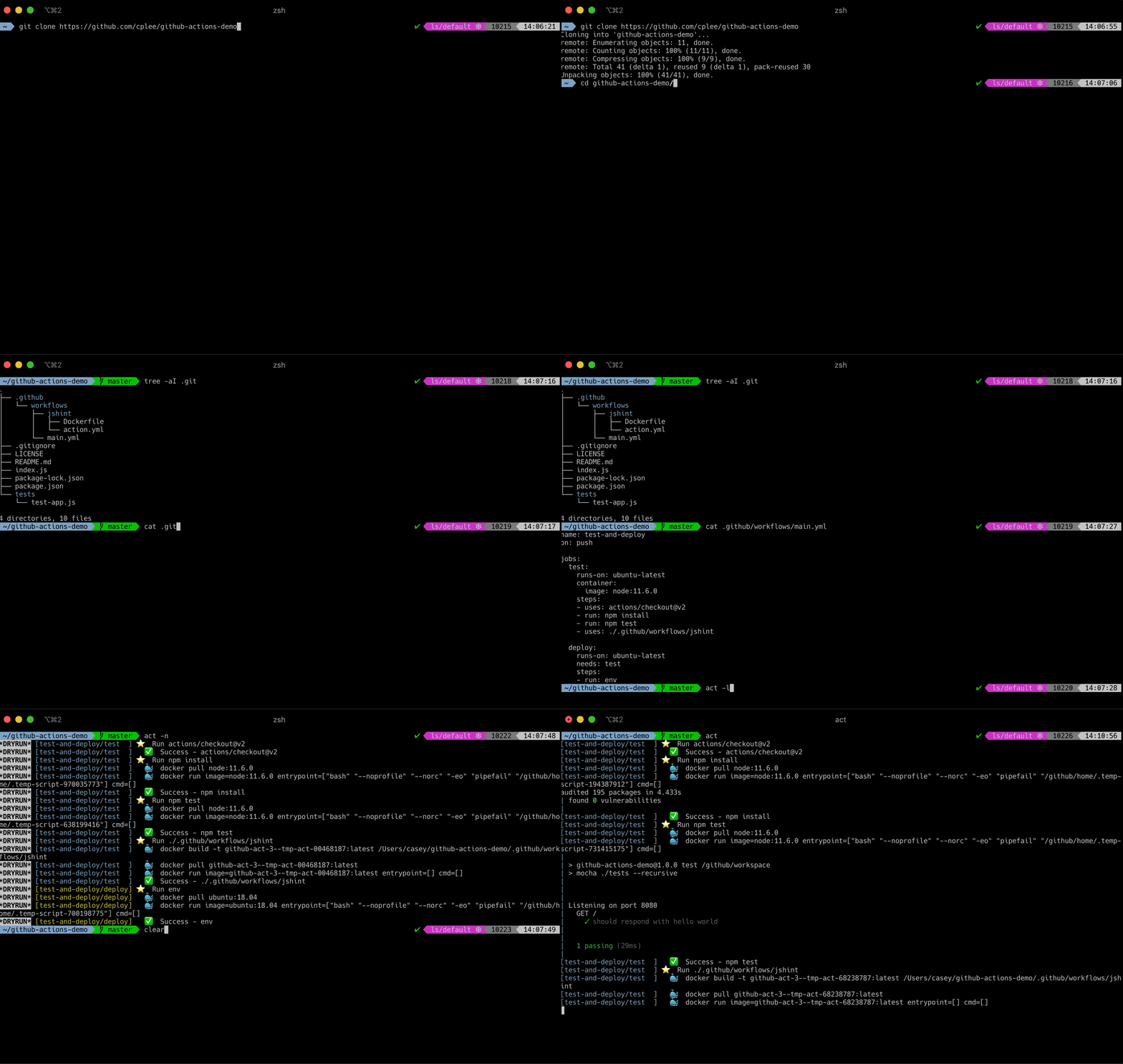
Please look at the act user guide for more documentation.
Need help? Ask in discussions!
Want to contribute to act? Awesome! Check out the contributing guidelines to get involved.
- Install Go tools 1.20+ - (https://golang.org/doc/install)
- Clone this repo
git clone git@github.com:nektos/act.git - Run unit tests with
make test - Build and install:
make install




Repository Radar analysis
Deterministic insights derived from public metadata and our observations — not personal testing or reviews.
Why this repository is interesting
- High absolute popularity (71,783 stars) signals broad adoption.
Who should use it
- Developers working primarily with Go
- Platform and DevOps engineers
Potential use cases
- Reference or evaluate Go open-source approaches in this domain
- Evaluate automation, CI/CD, or infrastructure patterns
Strengths
- README present in our index
- Declared license: MIT License
- Substantial fork count (2,023) suggests reuse and contribution interest
Limitations / considerations
- Insights are derived from public metadata and our observations — not a substitute for code review
What to watch
- Re-check last push, issues, and releases on GitHub before production adoption
Strong signals: Strong community interest
Source: GitHub (public metadata) + Repository Radar analysis. We do not claim ownership of third-party repositories.