

Github · GitHub Repository Radar
Significant-Gravitas AutoGPT
AutoGPT is the vision of accessible AI for everyone, to use and to build on. Our mission is to provide the tools, so that you can focus on what matters.
Stars
187
Forks
46,042
Watchers: 187,116
Language
License: Other
Repository Radar Score
54 / 100
Growth
- 7d
- +0
- 30d
- +0
- %
- 0.0%
Last observed: 6 days ago
Score breakdown
- popularity 57
- growth 0
- activity 90
- freshness 100
- community 90
Need help integrating this stack?
Our team builds with modern open-source stacks. Tell us what you are shipping.
Get a quote →

Get 10 hours back every week.
Describe what you want done. AutoGPT builds the agent, runs it, and reports back.
Get started · Tour · Pricing · Docs · Discord · Self-host
AutoGPT lets you build, deploy, and run AI agents that carry out complete workflows. Describe an outcome in plain English or shape every step in the visual builder, then run the agent on demand, on a schedule, or from a trigger.
185,000+ GitHub stars. Cited by:
| “Next frontier of prompt engineering imo: ‘AutoGPTs’.” | Andrej Karpathy, founding member of OpenAI |
| “If you have a phone you can run AutoGPT. You don't even need to learn how to code.” | Amjad Masad, co-founder & CEO of Replit |
| “AutoGPT might be the next big step in AI.” | Lior Alexander, CEO of AlphaSignal |
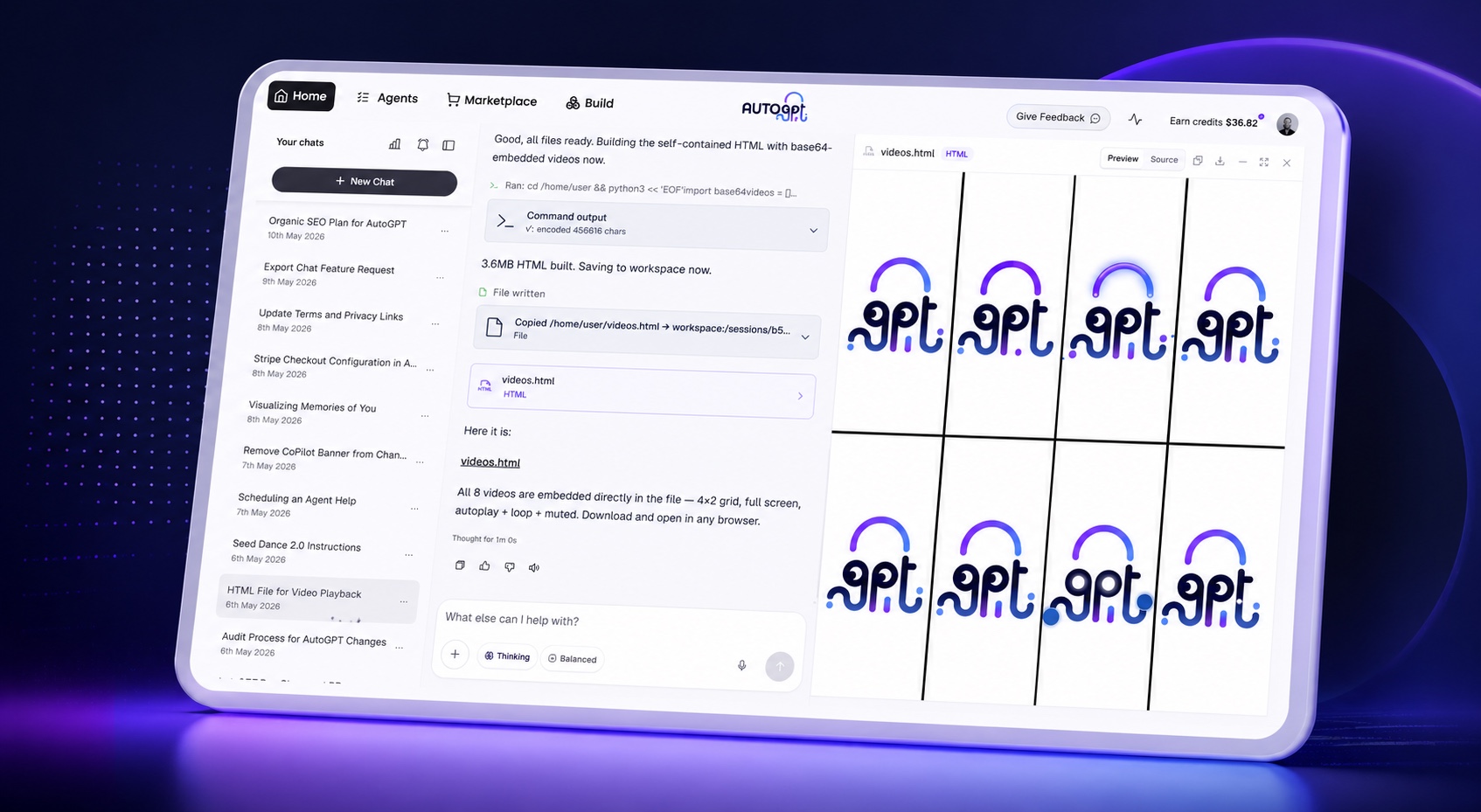
AutoPilot Describe the job in plain English and turn the conversation into a working agent. |
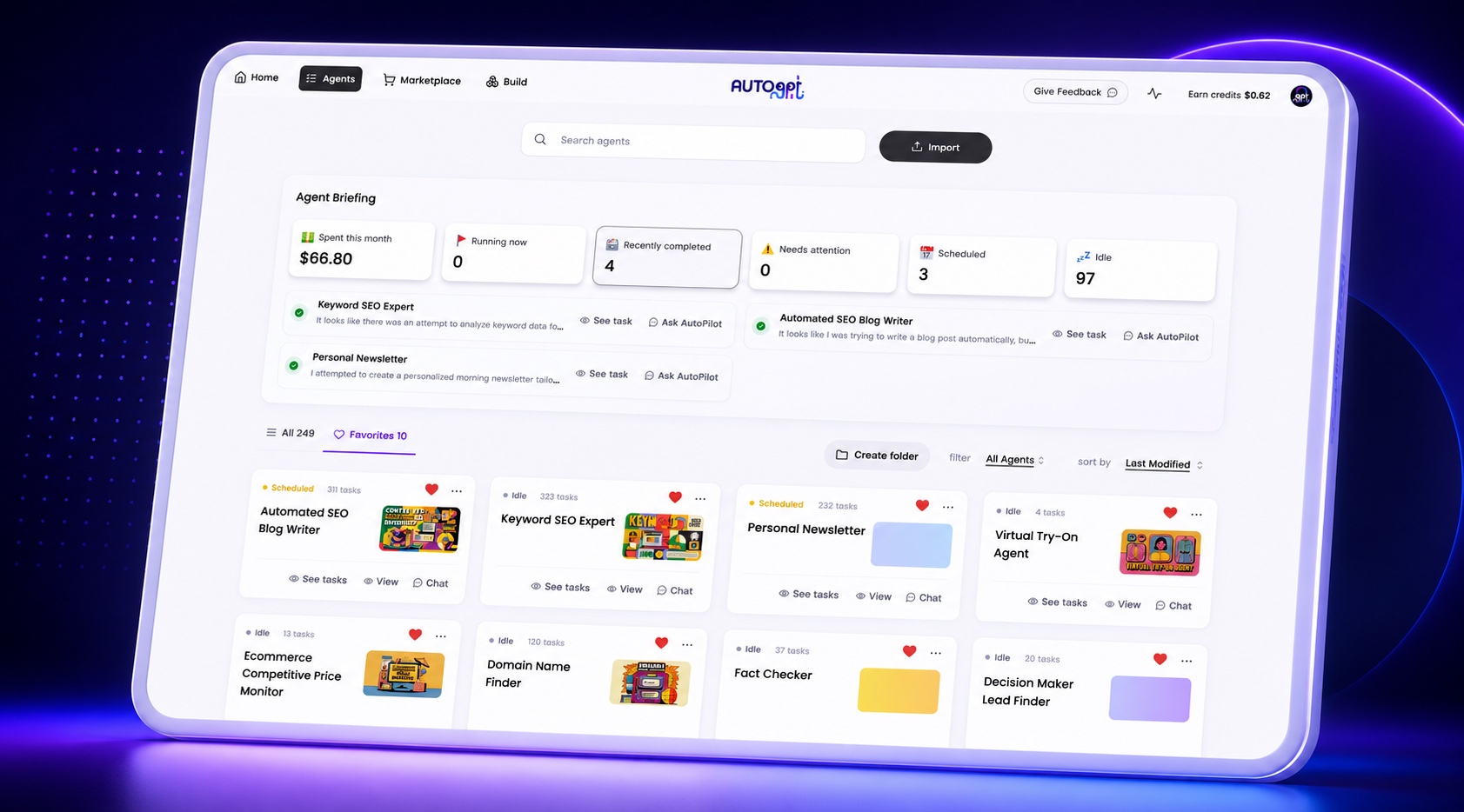
Agents See every agent, run, cost, and action that needs your attention. |
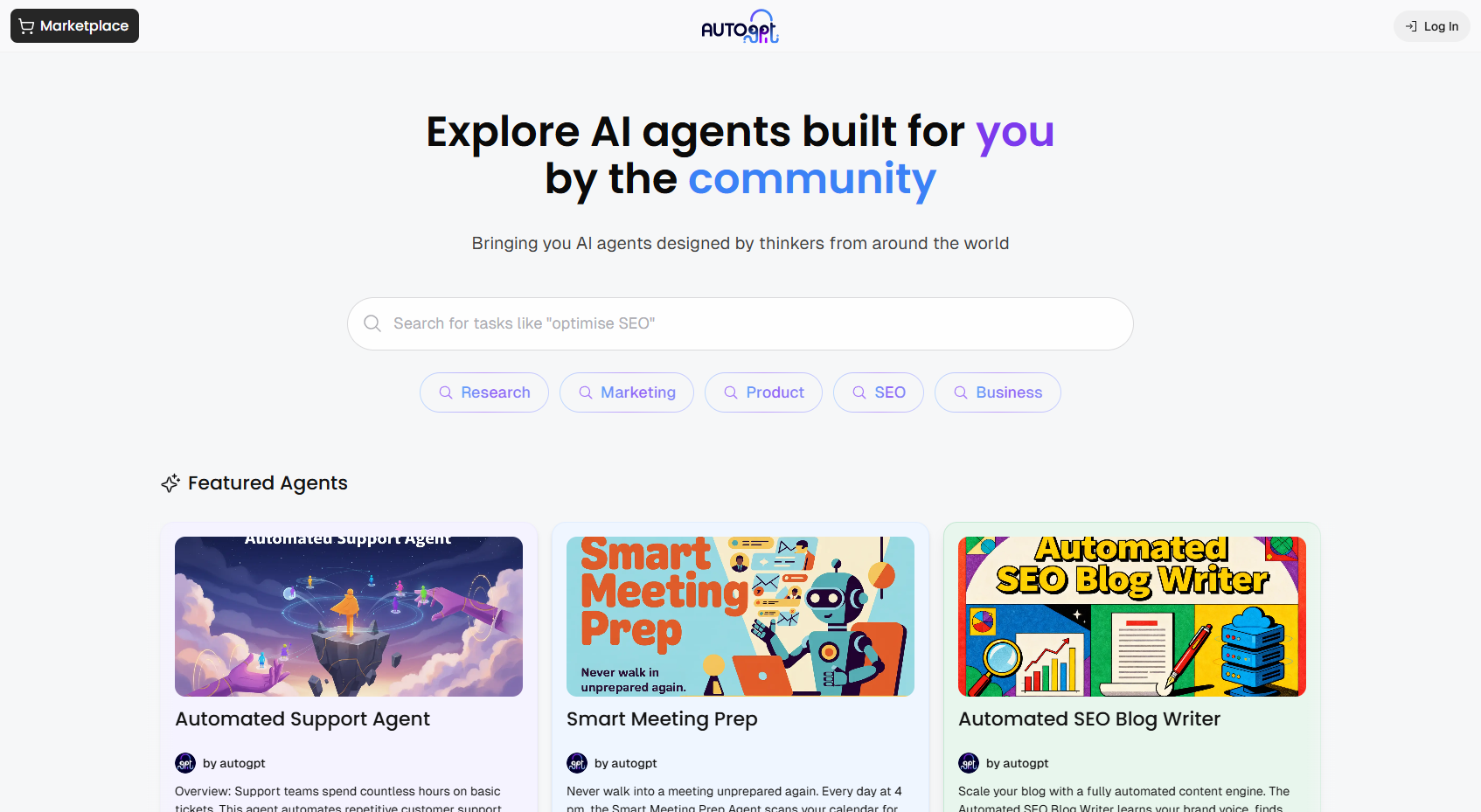
Marketplace Start from proven agents, add one to your library, and customize it for your work. |
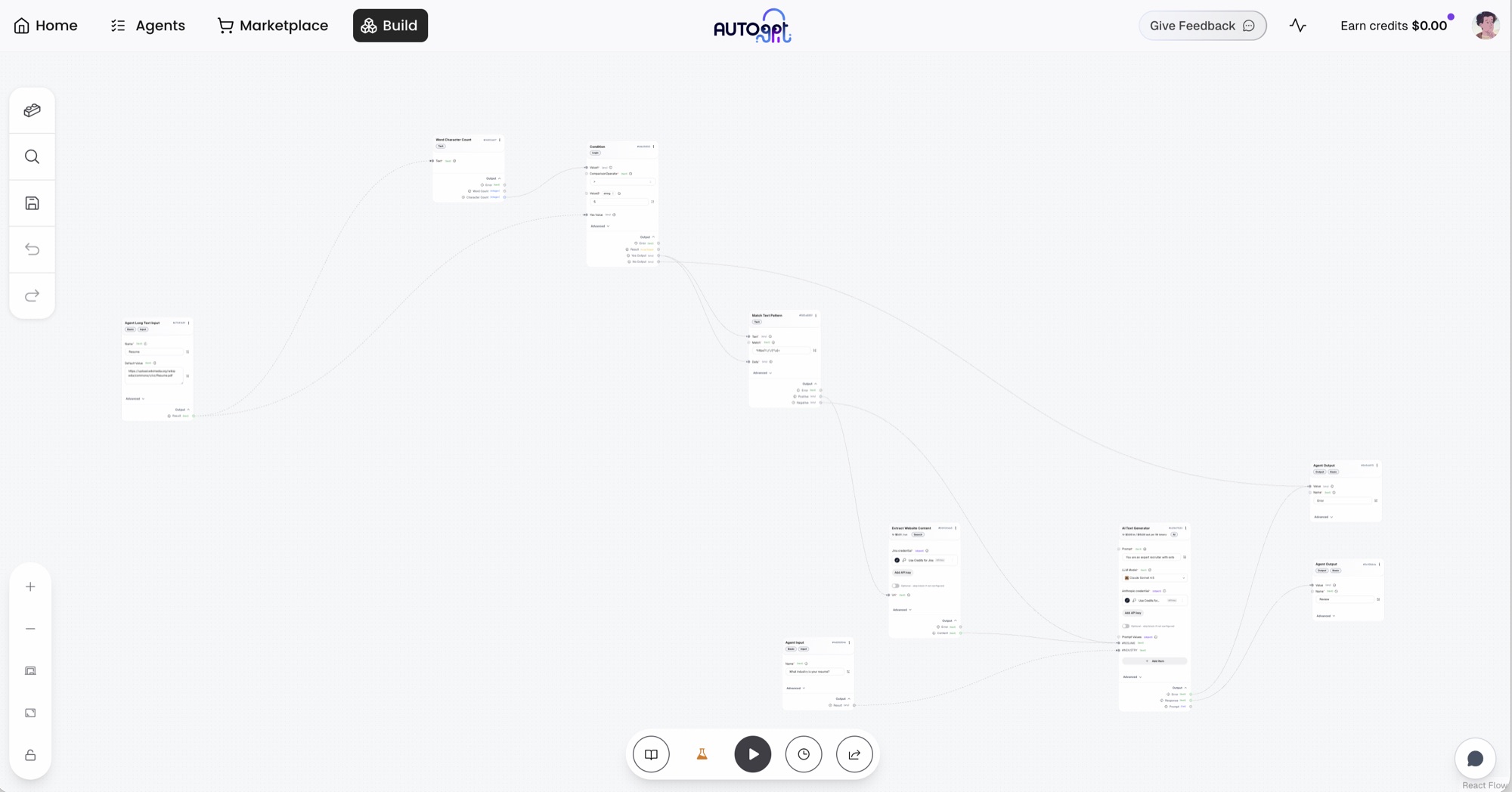
Build Drag, connect, branch, and inspect blocks for exact control over every step. |
The hosted Platform is publicly available. We manage the infrastructure, model access, credentials, reliability, and updates so you can focus on the work your agents perform.
Get started on AutoGPT Platform →
- AutoPilot, Agents, Marketplace, and Build
- 45+ connected platforms and hundreds of AI models
- No model API keys or infrastructure setup
- Agents that run on demand, on schedules, and from triggers
The hosted Platform is a paid service with usage-based agent runs. Compare plans and pricing →
Note
Self-hosting is the free path. You provide the infrastructure and model API keys, and you maintain the deployment. If you want zero setup, use the managed Platform.
macOS and Linux:
curl -fsSL https://setup.agpt.co/install.sh -o install.sh && bash install.shWindows PowerShell:
powershell -c "iwr https://setup.agpt.co/install.bat -o install.bat; ./install.bat"| AutoGPT Platform | Self-hosted | |
|---|---|---|
| Access | Public signup | Clone and install |
| Cost | Paid plan plus agent usage | No license fee; pay your own infrastructure and model providers |
| Setup | Managed | Docker and configuration required |
| Model access | Built in | Bring your own API keys |
| Updates and operations | Managed by AutoGPT | Managed by you |
| Core builder and agent runtime | Included | Included |
| Data and infrastructure control | Hosted by AutoGPT | Runs on your infrastructure |
| Support | Plan-dependent | Community support |
Both paths use the same repository. Choose the managed Platform when you want agents running immediately; self-host when infrastructure control matters more than operational convenience.
Every agent run consumes real model usage, compute, storage, secrets management, and operational support. The managed Platform covers that infrastructure and funds continued development of the open-source project.
Self-hosting remains available without a license fee for people and teams that want to provide and operate those resources themselves.
| Area | Example |
|---|---|
| Executive operations | Prepare a daily brief from internal and external signals |
| Sales | Research every account before tomorrow's meetings |
| Marketing | Turn a launch brief into campaign drafts across channels |
| Engineering | Triage incidents and start with a likely cause |
| Customer support | Draft replies, collect context, and flag escalations |
| Research | Monitor sources and return structured reports when something changes |
Connect the apps that are yours. AutoGPT provides access to hundreds of AI models and connects agents to 45+ platforms, including:
Gmail · Google Calendar · Google Docs · Google Sheets · GitHub · Slack · Discord · Notion · HubSpot · Linear · Airtable · Jira · Salesforce · Stripe · Webflow
| Resource | Link |
|---|---|
| Discord | Join the AutoGPT community |
| Documentation | docs.agpt.co |
| Bug reports | GitHub Issues |
| Feature requests | GitHub Discussions |
| Contributing | CONTRIBUTING.md |
| Component | License | What it means |
|---|---|---|
autogpt_platform/ |
Polyform Shield | Free for personal and internal business use; cannot be sold as a competing hosted service |
classic/ and everything else |
MIT | Permissive open-source use |
Looking for the original standalone AutoGPT agent? It remains available in classic/ under the MIT License.
Deutsch | Español | français | 日本語 | 한국어 | Português | Русский | 中文




Languages
Share of the codebase by language, based on repository metadata from the host.
- Python 66.7%
- TypeScript 31.6%
- JavaScript 0.5%
- PLpgSQL 0.4%
- Shell 0.3%
- Jinja 0.3%
- Dockerfile 0.1%
- CSS 0.1%
- C 0.1%
- Batchfile 0.0%
- Makefile 0.0%
- Elixir 0.0%
- HCL 0.0%
Repository Radar analysis
Deterministic insights derived from public metadata and our observations — not personal testing or reviews.
Why this repository is interesting
- Maintained recently (last push 2 weeks ago).
Who should use it
- Developers working primarily with Python
- Teams exploring AI tooling, agents, or ML infrastructure
- Platform and DevOps engineers
- Backend engineers shipping APIs and product backends
Potential use cases
- Reference or evaluate Python open-source approaches in this domain
- Prototype AI/agent workflows or study reference architectures
- Evaluate automation, CI/CD, or infrastructure patterns
Strengths
- Recent repository activity
- README present in our index
- Declared license: Other
- Substantial fork count (46,042) suggests reuse and contribution interest
Limitations / considerations
- Insights are derived from public metadata and our observations — not a substitute for code review
What to watch
- Re-check last push, issues, and releases on GitHub before production adoption
Strong signals: Active maintenance
Source: GitHub (public metadata) + Repository Radar analysis. We do not claim ownership of third-party repositories.